



Business Loan Payback Period is Most Important

Business Loan Payback Period is Most Important

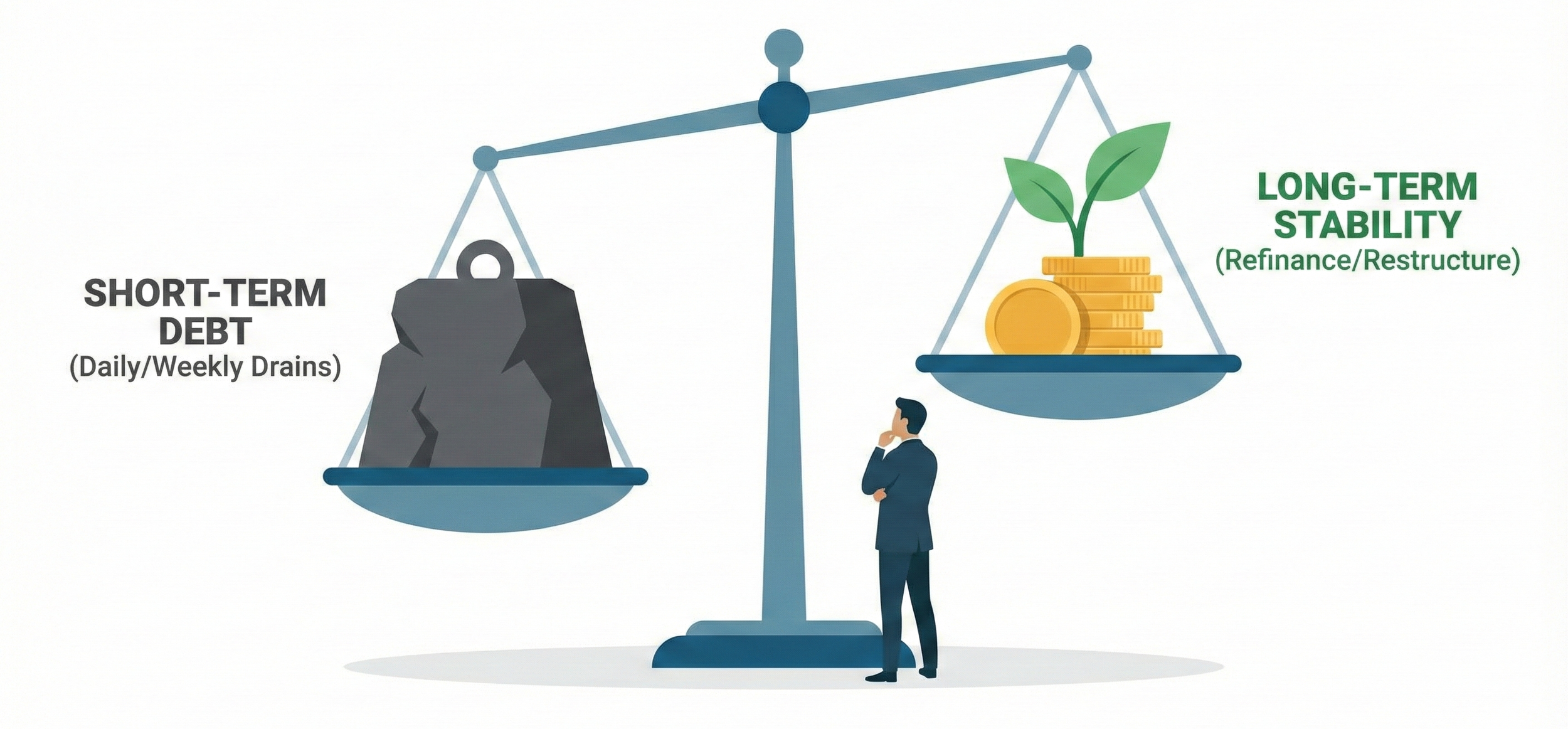
For the average small and medium-sized business owner, the interest rate is the most visible metric, the one we are taught to haggle over, and the one that feeds the ego. We want to brag about a "cheap" loan. But in the cold, hard reality of the balance sheet, a low interest rate is a vanity metric. If you are prioritizing the cost of capital over the amortization schedule (payback period), you aren't being frugal—you are being dangerous. You are effectively prioritizing the "price" of the money over your company’s ability to draw its next breath.

The cost of capital tells you what the business debt costs in a vacuum. Business loan amortization tells you whether that business debt will actually fit through your front door without breaking the hinges. An 25%+ interest rate on a loan that must be repaid in twelve-four months can be a death sentence, while an 11% rate spread over ten years is a strategic asset. If you want your business to survive a downturn or fund a massive expansion, you must stop obsessing over the rate and start weaponizing the business debt payback timeline.

Avoiding Business Financing Traps

Avoiding Business Financing Traps

As a business owner, you wear more hats than any single person should. But when it comes to business financing and cash flow—the very lifeblood of your operation—even a small misstep can have a ripple effect that touches every corner of your business.

Strategic financing is not just about securing capital; it’s about making every dollar count, preserving your solvency, and setting the stage for sustainable growth.

This article is your practical guide to the most common, yet most damaging, business financing mistakes businesses make. More importantly, we’ll provide concrete, step-by-step solutions to help you fix them if they’ve already happened, and build a more resilient business financial future.

Business Finance Advisor vs. Funding Broker

Business Finance Advisor vs. Funding Broker

When the problem you need to solve is a lack of capital, the path forward can seem foggy and fraught with peril. You know you need money to grow your business, to hire, to purchase equipment, or simply to survive a cash-flow crunch. In your search for a solution, you will inevitably encounter two very different types of professionals: the Business Finance and Strategy Advisor and the Transactional Business Funding Broker.

To the uninitiated, they might seem to serve the same purpose—they both help you get money for your business. However, this is like saying a fast-food cashier and a personal nutritionist both help you get food. While technically true, their roles, processes, motivations, and the long-term impact on your business's health are worlds apart.

Choosing the right partner and advisor isn't just a simple decision; it's a strategic choice that can define your company's trajectory for years to come. This article will demystify these roles, explore their profound differences, and empower you to decide which one is the right fit for your unique situation. We will journey beyond the surface-level pitch and delve into the core philosophy that separates a one-time transaction from a long-term strategic partnership.

Aggressive Business Creditor Strategies

Aggressive Business Creditor Strategies

Managing business debt and navigating the sometimes choppy waters of business creditor relations is a constant, demanding task. You juggle inventory, payroll, and customer service, all while trying to keep your financials stable and compliant.

But what happens when the waters turn turbulent, and an aggressive junior (subordinate)  creditor (provides business loans “behind” or “after” your first creditor) starts applying serious pressure? You might feel exposed, even desperate.

This is precisely when understanding the role of your senior business creditor becomes not just prudent, but a vital strategic advantage. They are not merely the holder of your largest debt; they are, in many crucial ways, your most powerful, and often unexpected, ally.

This article will define these two critical creditor types and explore the multifaceted ways your senior lender can become your shield and guide in times of financial duress. Understanding this dynamic is key to surviving and thriving when faced with an uncompromising junior business debt lienholder.

Phantom Business Profit Paradox

Phantom Business Profit Paradox

It is the ultimate gut-punch. You pull your year-end reports, and the numbers are screaming success. Your Profit and Loss statement shows a healthy, enviable net income. Your sales team is hitting targets, and on paper, you’re killing it. But when you log into your business banking app, the reality is a cold, hard slap in the face: the balance is pathetic.

You’re staring at a screen that says you’re rich, while your actual bank account says you’re broke. You find yourself pacing the floor, demanding an answer to one question: "If I’m making so much money, where the hell is the cash?"

This isn’t just a "glitch" in the system; it’s the Phantom Profit Paradox, and it’s the silent killer of otherwise "successful" companies. You need to understand right now that profit is nothing more than an accounting theory. It’s an opinion.

Cash, on the other hand, is a physical fact. You can’t pay your employees with "profit." You can’t pay your rent with "net income." If you don’t bridge the gap between these two metrics immediately, your "profitable" business is going to go bankrupt with a smile on its face. It’s time to stop looking at your P&L through rose-colored glasses and start hunting down the cash thieves hiding in your operation.

The World of Private Credit Business Financing

The World of Private Credit Business Financing

Banks have become paralyzed by regulation and risk-aversion, leaving high-performing businesses trapped in a "credit gap." Short-term lenders are charging unsustainable and excessive fees and interest for business financing.  Where can a business owner turn in this economy for strategic growth capital or for business refinancing of existing business debt?

Private credit is the weapon of choice for business owners who refuse to be sidelined. It is not a secondary option; it is a sophisticated, aggressive alternative to the lethargic lending practices of the past and the aggressive and expensive fintech lending of current day. For the business owner who wants to win, private credit is the strategic tool to recapitalize suffocating business debt and replace it with flexible, high-velocity capital.

Private credit providers are not looking for reasons to say "no" like your local bank manager. These are private debt investment funds, high-net-worth family offices and institutional investors who value enterprise strength over static collateral. They do not care about the "one-size-fits-all" metrics that banks use to reject ambitious companies. They look at your business cash flow, your market dominance, your story and your trajectory.

By moving into the private credit space, you are stepping away from the amateur hour of retail banking and online lenders, entering a market where business capital is structured to fuel expansion, not just monitor compliance.

Strategic Business Financial Recovery

Strategic Business Financial Recovery

When a company finds itself burdened by high-interest business obligations or a repayment schedule that outpaces its incoming cash flow, the situation demands immediate, strategic intervention.

Fixing business financing mistakes is not merely about finding more capital; it is about fundamentally altering the structure of existing liabilities and the operational habits that created them. By leveraging business debt restructuring, refinancing, and rigorous operational pivots, a company can turnaround a looming crisis into sustainable stability.

The pathway towards recovery begins with an honest assessment of how the organization reached its current state. Financial distress rarely happens overnight; it is typically the result of a series of decisions that, while perhaps logical at the time, failed to account for the unpredictable nature of the modern economy.

For the small and medium-sized business owner, the weight of business debts and high payments can feel personal, but the solution must be entirely professional. Strategic recovery requires a cold, analytical look at the income statement, cash flow statement and balance sheet with willingness to dismantle and rebuild the financial architecture of the business from the ground up. This process is intensive, but it is the only way to reasonably ensure that the business does not just survive the current month, but thrives well into the future.

High Business Debt Payments are Dismantling Your Organization

High Business Debt Payments are Dismantling Your Organization

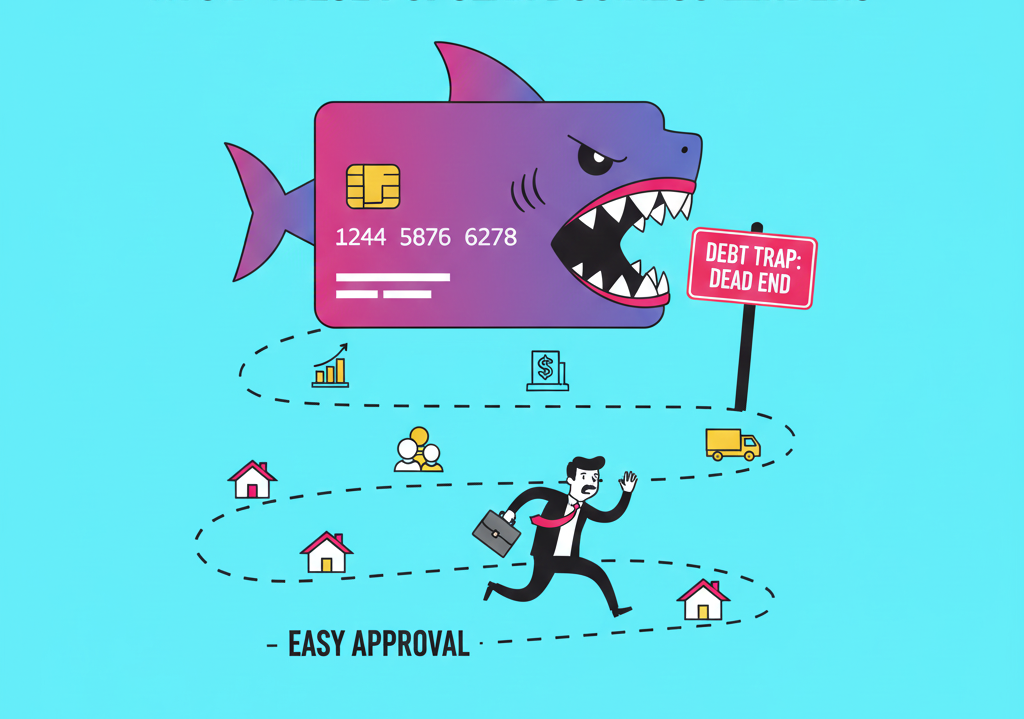
In the modern business financing marketplace, quick-fix capital is often marketed as a lifeline for small and medium-sized businesses, offering immediate relief from cash flow constraints with minimal underwriting. However, beneath the surface of “fast” or “24-hour” approvals and easy accessibility lies a predatory mechanism that effectively dismantles organizations from the inside out by reducing a company’s ability to re-invest into itself.

By trading future revenue for immediate liquidity through high-cost factor rates and daily or weekly remittances, business owners unwittingly enter a cycle of "negative compounding" that siphons off the very resources required to sustain basic operations: Cash Flow

This article explores the systemic erosion of business value that occurs when high-interest, short-term business debt payments replaces strategic reinvestment. Beyond the immediate financial strain, we examine how these obligations create a "lost half-decade," where marketing efforts are silenced, talent acquisition is frozen, and product innovation grinds to a halt.

When an organization prioritizes the profits of a lender over its own growth, it does more than just lose money—it relinquishes its market position to unburdened competitors and traps the business in a state of permanent stagnation.

Avoid These Popular Business Lenders

Avoid These Popular Business Lenders

When business cash flow tightens or an urgent growth opportunity arises, the standard three-month wait for a traditional bank loan feels like an eternity. This is why many entrepreneurs turn to the alternative business lending market. However, speed and convenience often come with a hidden, heavy price tag. While some providers offer necessary bridges for business growth, others utilize structures that can slowly bleed a business of its cash flow and ability to invest in the future.

The alternative business lending landscape is a spectrum, ranging from established financial technology companies to aggressive marketplaces and brokers. Understanding the specific mechanisms used by the lenders frequently featured in the alternative business lending space is essential for your survival. This article examines the most common high-risk lenders and the structural "traps" they use, ensuring you can identify when an offer is designed to help your business—and when it is designed to consume it.

US Businesses are Being Gutted by Short-Term Predatory Lending Companies

US Businesses are Being Gutted by Short-Term Predatory Lending Companies

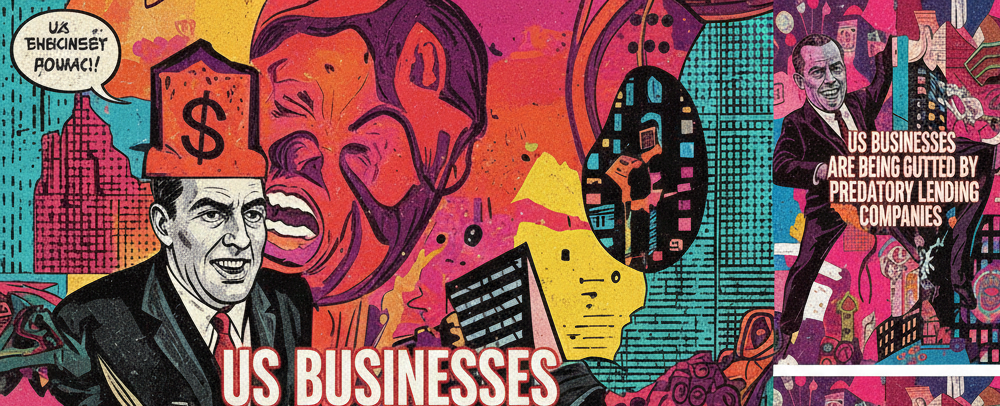
In the ecosystem of small and medium-sized business finance, there is a class of lenders or “funders” that functions less like a capital partner and more like an equity parasite. They don't care about your business plan, your legacy, or your employees. They care about one thing: the velocity at which they can siphon cash out of your operating account. While they brand themselves with sleek, modern logos and talk about "democratizing capital," they are, in reality, high-tech loan sharks.

The short-term lending space is built on a foundation of intellectual dishonesty. Underwriters in this sector are often nothing more than glorified data-entry clerks or automated scripts that ignore every principle of sound finance. They approve loans that they know a business cannot afford to make payments on without experiencing negative cash flow, and they bank on the fact that they can use aggressive, scorched-earth collection techniques to secure their profit before your company inevitably hits the wall. This is not lending; it is a controlled liquidation of your hard-earned equity. Pay or die.

Breaking the High-Interest Business Debt Cycle

Breaking the High-Interest Business Debt Cycle

For many business owners, the path to growth is often paved with various forms of financing. However, it is remarkably easy to find yourself in a position where the very capital intended to fuel your expansion begins to choke your daily operations and business cash flow.

When business debt service payments begin to outpace your available business cash flow, you aren't just running a business; you are managing a crisis. The transition from a thriving enterprise to one burdened by high-interest, short-term obligations can happen subtly until the monthly "nut" becomes impossible to crack.

This article explores a comprehensive strategy for restructuring debt, leveraging hidden equity, and reclaiming the financial health of your business.

Brutal Truths About Business Debt Messes

Brutal Truths About Business Debt Messes

Your business may be in immediate danger. This is not a drill, and it is not a gentle suggestion to review your accounting practices. If you are reading this because your business is drowning in debt, you are standing on the precipice of total insolvency, and the ground is crumbling beneath your feet.

The sleepless nights, the dread of opening your email, the pit in your stomach when the phone rings—these are not just symptoms of stress; they are the warning lights of a catastrophic engine failure.

Your business is heading towards dying. It is harsh to say, but if you do not acknowledge the severity of your situation, you may risk losing everything you have built. The time for optimism and "waiting for the big deal to close" is over. You are in a war for business survival.

How Easy Business Capital Can Be Destructive

How Easy Business Capital Can Be Destructive

Every small business owner knows the feeling of urgent necessity. A piece of critical machinery breaks down, a golden opportunity for bulk inventory arises, or payroll is approaching faster than accounts receivable are clearing.

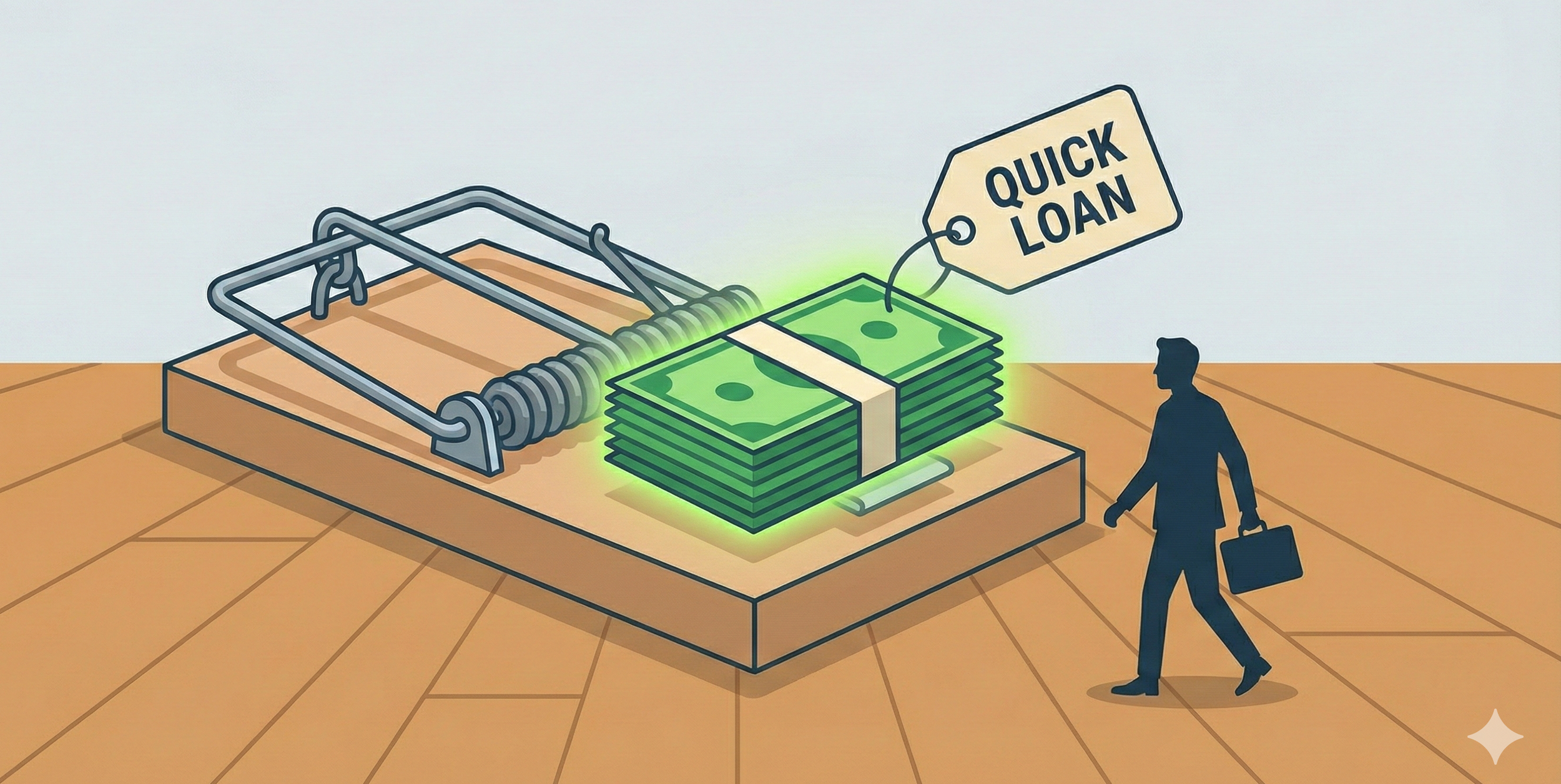
In these moments, the allure of immediate capital is intoxicating. Alternative, non-bank business lenders and merchant cash advance (MCA) providers market themselves as the saviors of the modern entrepreneur, offering funds in hours with minimal paperwork. They promise agility and speed, bypassing the bureaucratic sloth of “traditional banking”.

However, this convenience often masks a predatory structure designed to siphon value rather than inject growth. The initial relief provided by a quick deposit rapidly dissolves into a chaotic struggle for survival. What begins as a lifeline transforms into a lead weight, dragging the company beneath the waves of its own obligations. By prioritizing speed over sustainability, these financial products introduce a toxicity that fundamentally alters the trajectory of a business. The damage is not just financial; it is operational, psychological, and often terminal unless restructured and/or refinanced.

The narrative sold by these funders is one of partnership and support, yet the reality is often strictly transactional and extractive. They rely on the business owner’s lack of time and desperate need for liquidity to push through agreements that no traditional bank would ever sanction.

Let this serve as a warning: the speed of funding is almost always inversely proportional to the safety of the financing.

Understanding this trade-off is the first step in protecting the business legacy you have built.

Business Debt is Stifling Cash Flow, Now What?

Business Debt is Stifling Cash Flow, Now What?

Every morning or perhaps every Friday, thousands of small business owners across the country wake up to the same digital reality check. Before they can review new orders, check on employee schedules, or pour a cup of coffee, they log into their business bank accounts to see how much cash vanished overnight. For many, the answer is a staggering sum, withdrawn automatically by multiple lenders, merchant cash advance providers, and business financing fintech platforms.

This is the trap of weekly (or daily) remittances, a phenomenon that turns profitable operational models into cash-poor nightmares. When a business owner stares at a balance that is constantly draining due to these high-frequency withdrawals, the psychological pressure to find a quick fix becomes overwhelming.

Business Debt Payback Period vs Cost of Capital

Business Debt Payback Period vs Cost of Capital

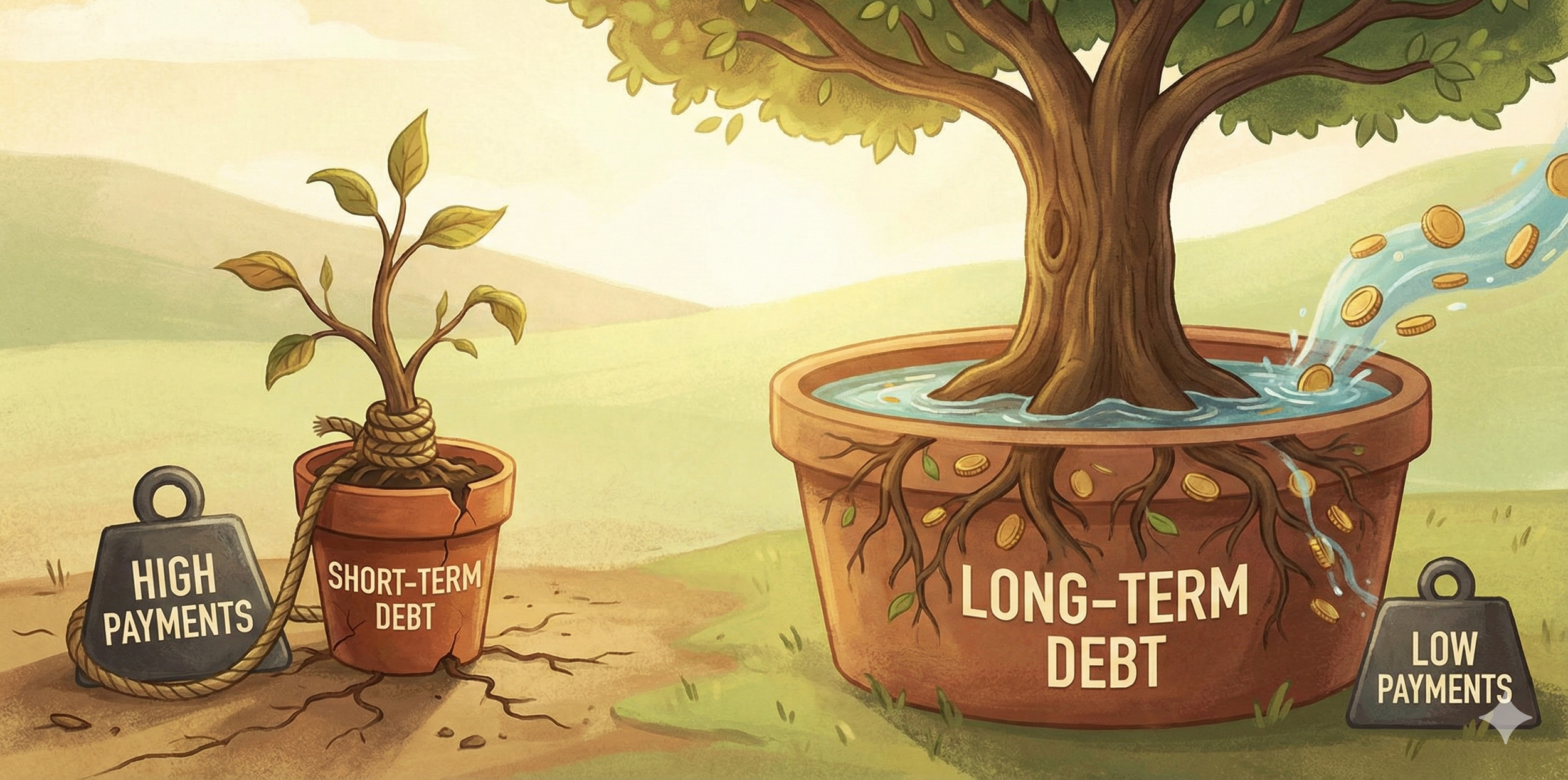
From analyzing the mechanics of short-term versus long-term business financing to weighing the true cost of capital, we provide a strategic roadmap for leveraging business debt to fuel growth rather than choking your business cash flow and operations.

Ultimately, the best scenario is indisputable: long-term, low-cost business debt. It provides the capital necessary for growth without the stranglehold of aggressive repayment. Business owners must resist the emotional urge to clear the books quickly and instead embrace the strategic advantage of amortization.

By keeping cash in the business rather than sending it to the lender, the owner retains the power to steer the company through uncertainty and toward long-term prosperity.

This article challenges the traditional "debt-free" dogma by examining the critical relationship between business loan terms and business operational survival. We will explore why extending your business debt payback period, even at the cost of more total interest paid over the long run, is often the superior strategy for maintaining a healthy business cash flow.

Business Post-Pandemic Financing and Why Survival Was Just the First Step

Business Post-Pandemic Financing and Why Survival Was Just the First Step

There is a silent crisis brewing beneath the surface of this survival story. For many business owners, the adrenaline of navigating the immediate crisis has faded, only to be replaced by a stark financial reality. The survival phase required capital, and for many, that capital came in the form of borrowed money.

We are now navigating a unique economic landscape where the stimulus has dried up, consumer habits have permanently shifted, and inflation has driven up the cost of goods sold. While the acute phase of the health crisis is over, the chronic phase of the financial crisis is just beginning for Main Street. The "new normal" is about managing a balance sheet that looks drastically different than it did 3 to 5-years ago.

Many business owners are finding that the very tools that saved them—loans, deferred payments, and credit extensions—are now the anchors dragging them down. The revenue may have returned, but the margin for error has vanished.

This section of the economic cycle requires a different mindset. It is no longer about raw survival; it is about stabilization. The businesses that will thrive in the coming decade are those that recognize the game has changed from a sprint to a marathon, and they are currently carrying too much weight in their backpacks to finish the race.

Resurrecting a Distressed Business

Resurrecting a Distressed Business

The weight of debt payments and the crushing reality of cash flow shortages can feel like a physical burden. You are likely reading this because the math is no longer working. The inflows are a trickle, the outflows are a flood, and the debt service is consuming every spare dollar of margin you manage to generate. It is a terrifying position, yet it is not a unique one. Countless success stories began as near-failures. The difference between bankruptcy and a legendary turnaround is rarely luck; it is a mixture of brutal honesty, strategic negotiation, and immediate, decisive action.

This guide is designed to walk you through the rigorous process of stabilizing a sinking ship. We will dismantle the complex mechanics of a financial turnaround into actionable, distinct phases. There are no quick fixes here, only hard work and disciplined financial engineering. By following these steps, you move from a state of panic to a state of control, eventually steering the enterprise back toward profitability and growth.

The Business Lender Divide, Speed vs. Stability

The Business Lender Divide, Speed vs. Stability

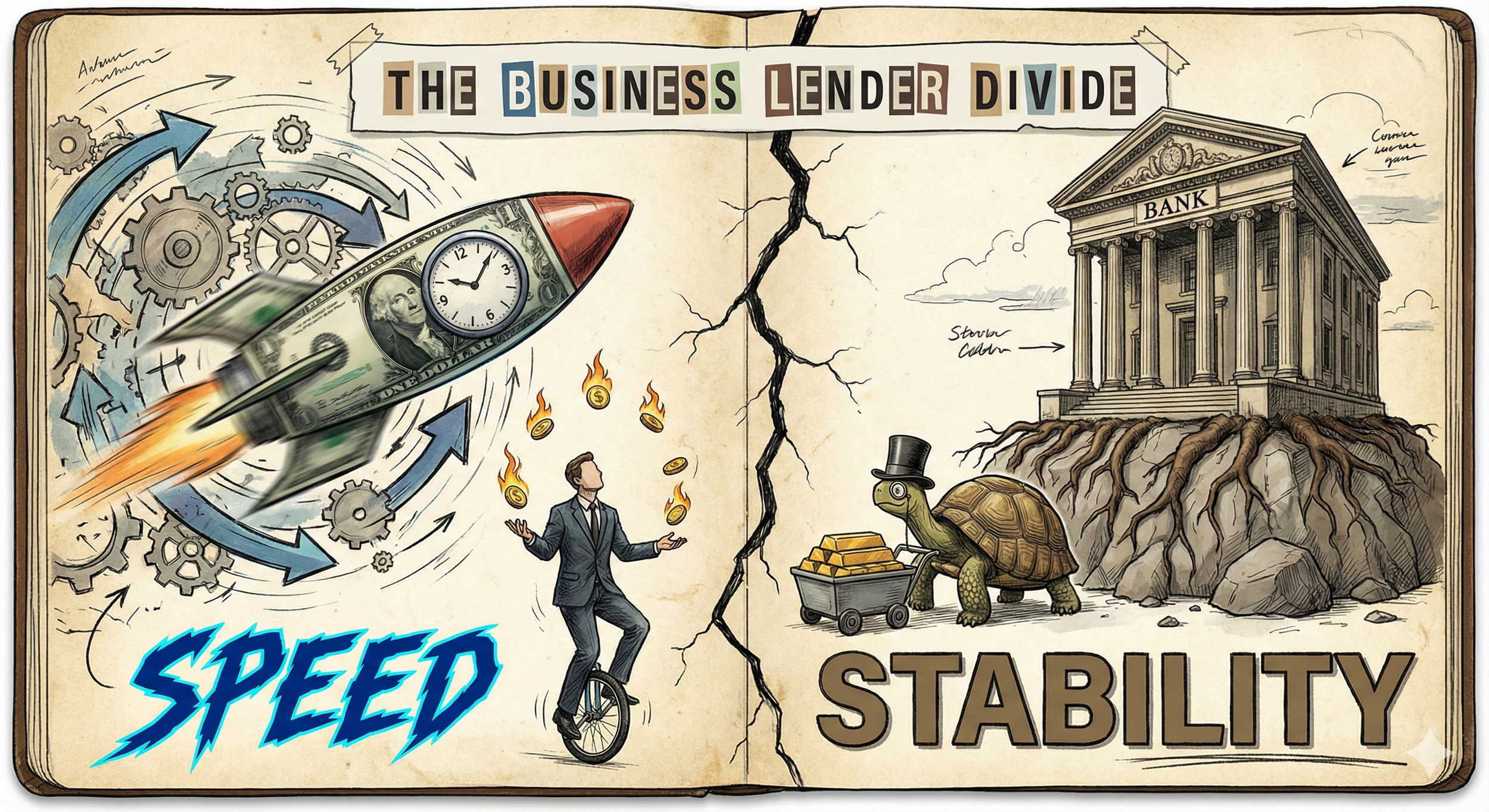
Every small business owner eventually faces the crossroads of capital. You need money to grow, to bridge a gap, or to seize an opportunity that just walked through the door. In that moment of need, the financial market presents you with two very different paths.

One path is paved with speed and accessibility but lined with aggressive demands that can choke your daily operations. The other path is steeper and harder to climb initially, but it leads to a plateau of stability and sustainable growth. This is not just a choice between two different loans; it is a choice between two fundamentally different philosophies of underwriting and two distinct futures for your business cash flow.

Understanding the difference between long-term, EBITDA-based underwriting and short-term, cash flow-only underwriting is the single most important financial lesson a founder can learn. It is the difference between renting money at an exorbitant daily rate and partnering with a creditor who views your success as their security.

To navigate this landscape, you must peel back the curtain on how these lenders think, how they measure risk, and why one model encourages aggressive timelines while the other fosters reinvestment.

Multiple Business Creditors Stifle Growth and Refinancing Potential

Multiple Business Creditors Stifle Growth and Refinancing Potential

For a thriving business owner, the sight of a balance sheet peppered with a dizzying array of different creditors, each with its own terms, conditions, and lien priority, is a red flag that demands immediate attention. This common scenario, often a byproduct of rapid growth or fragmented, opportunistic financing, creates a business financial landscape that is not only difficult to manage but actively works against your company's ability to secure favorable refinancing, obtain competitive costs of capital, and lock in the long-term payback periods essential for stable business cash flow.

This article is a deep dive into the corrosive effect of a fractured business debt liability structure. It is designed to equip you, the business owner, with a clear understanding of why a consolidated, streamlined balance sheet is the bedrock of future financial health and how the current complexity is undermining your company's true value and potential. We will explore the interconnected difficulties presented by a crowded creditor list and outline the compelling case for business financial consolidation.

Things to Avoid in Business Finance

Things to Avoid in Business Finance

Private business ownership is a journey fueled by passion, resilience, and, often, a healthy dose of optimism.

This entrepreneurial spirit is vital, but when that optimism morphs into a passive reliance on "hope" for critical financial outcomes, it becomes a liability.

For owners facing a complex landscape of business financing, relying on wishful thinking can be the difference between securing the capital needed for growth and facing a catastrophic failure.

It is time to replace vague aspirations with concrete, verifiable strategies and robust due diligence, especially when engaging with external business financial advisors and transactional brokers.